When people travel around Japan, most choose trains or the famous Shinkansen. Japan’s railway system is incredibly efficient, making it easy to move between major cities.
However, there is another way to experience Japan that many travelers overlook — a road trip.
My Australian partner and I enjoy taking a road trip in Japan at least once a year. On this trip, we drove from Atsugi near Tokyo to Nara, using Nara as our base while also visiting Osaka during our two-night, three-day journey.
Along the way we saw Mount Fuji, drove past Lake Hamana, stopped at highway service areas, met the famous deer in Nara, and ate okonomiyaki in Osaka’s vibrant Dotonbori district.
Traveling by car allowed us to experience parts of Japan we would never have seen from a train window. In this article, I will share our road trip experience and why driving in Japan can be a surprisingly enjoyable way to travel.
Why Road Tripping in Japan Is Worth Trying
Japan is often seen as a country best explored by train. While that is true, driving in Japan is actually very comfortable and safe.
One reason I appreciate driving in Japan is the lack of wildlife on highways. In Australia, I once hit a wild animal while driving. Kangaroos and other animals can suddenly jump onto the road, especially at night, which can be dangerous.
In contrast, Japanese highways are well managed and fenced, so encounters with animals are extremely rare. This makes long-distance driving far less stressful.
For drivers from countries like Australia, the UK, or New Zealand, Japan is also easy to adapt to because the country uses right-hand drive and left-side traffic.
However, one thing drivers should be aware of is that roads in Japan are narrower than in many Western countries. In my personal experience, the width of three Japanese lanes sometimes feels similar to two lanes in Australia.
Still, the biggest reason to take a road trip in Japan is the scenery. Driving allows you to see mountains, rural towns, rice fields, and landscapes that many tourists miss.
My partner often becomes excited during the drive, pointing out scenes and saying things like:
“This view looks so Japanese.”
“You would never see this if you only traveled by train.”
Another unique feature of Japanese road trips is the highway service areas. In many countries, service areas are simply places to refuel and use the restroom. In Japan, they are much more than that.
Many service areas include restaurants, cafés, convenience stores, and souvenir shops. Some even have hot springs, foot baths, observation wheels, dog parks, or small attractions.
Stopping at these service areas becomes part of the travel experience itself.
Day 1: Driving from Tokyo to Nara
To drive from the Tokyo area to western Japan, most travelers use the Tomei Expressway.
As we drove further away from Tokyo, the scenery slowly changed. Tall buildings disappeared and were replaced by mountains, forests, and farmland. It felt like we were gradually leaving the busy city behind.
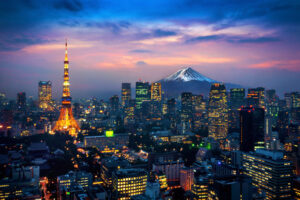
Near the town of Oi-Matsuda, we began to see Mount Fuji in the distance. Its wide base and snow-covered peak made it look majestic. Seeing Fuji during a road trip feels like a classic Japanese travel moment.
Once Mount Fuji disappeared behind us, it truly felt like we were traveling far from home.
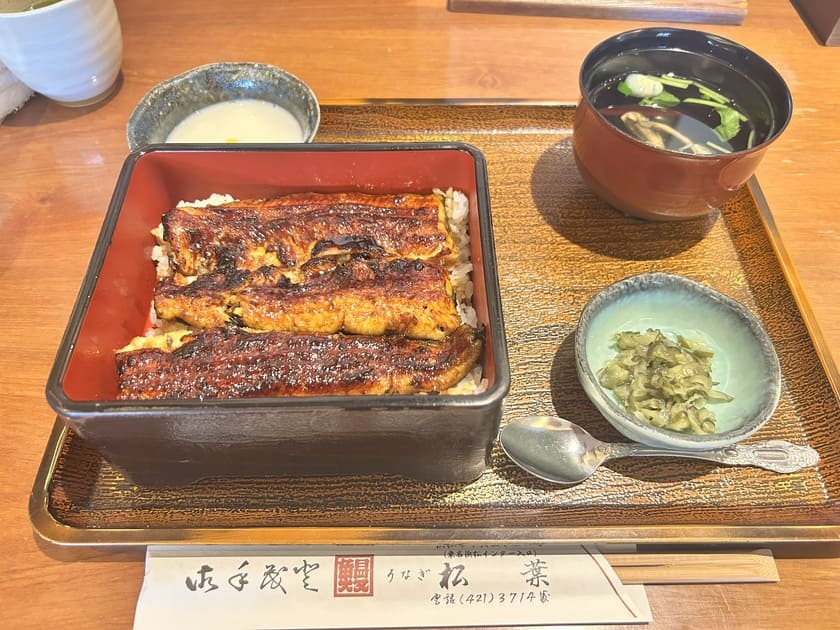
Whenever I pass through Lake Hamana in Shizuoka, I always think about its famous local food — eel.
The grilled eel served here is cooked over charcoal. The outside is slightly crispy while the inside remains soft and rich with flavor. My partner usually becomes completely silent while eating it, focusing only on the meal.
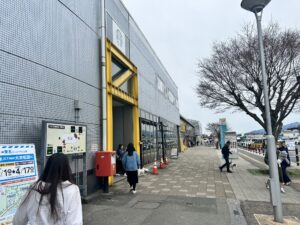
Our car is an electric vehicle, so we needed to stop twice along the highway to charge the battery. While the car was charging, we used the time to relax, stretch, and explore the service areas.
These charging breaks became a nice part of the trip. Unlike a quick gasoline stop, EV charging gave us time to slow down and enjoy the journey.
We arrived in Nara around 4:30 PM. After seven hours of driving, our eyes were tired, so we decided not to go to Osaka that evening. Instead, we had dinner at a small local restaurant near the hotel.
Local restaurants are great places to experience regional Japanese food and local sake, which is called jizake. It is made from rice grown in that region and pairs well with local dishes.
Sometimes these small restaurants even offer home-style Japanese food that you would not normally find in larger restaurants.
My partner especially loves izakaya, Japanese casual dining pubs. They serve many small dishes such as sashimi, tempura, fried chicken, pickles, and hot pots, making it easy to try many different flavors in one meal.
Day 2: Exploring Nara and Osaka
The next morning we explored Nara Park.
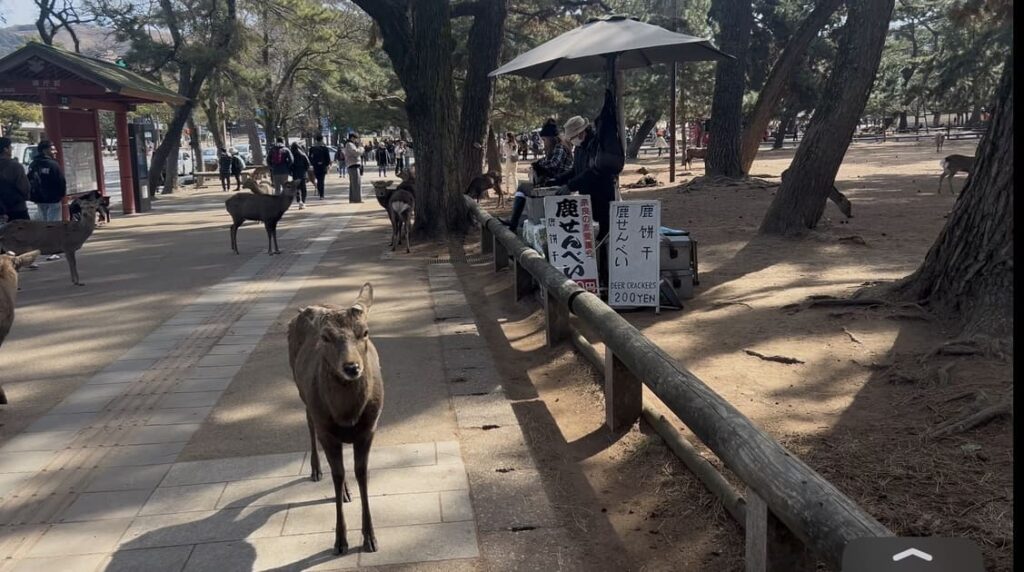
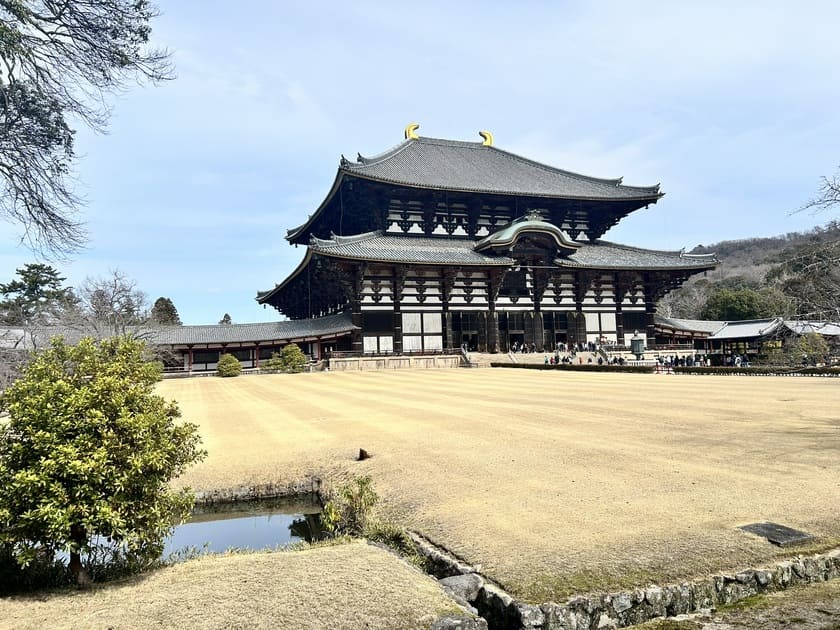
Todaiji Temple was even more impressive than I expected. Standing in front of such a massive wooden building made me feel a deep sense of history and nostalgia. The structure has survived for centuries, which is remarkable.
While I admired the temple architecture, my partner was completely fascinated by the Nara deer.
Visitors can buy special crackers called shika senbei to feed the deer. My partner bought them three times and carefully chose small, thin deer to feed.
Before giving the crackers, he would bow to the deer. When a deer bowed back, he became incredibly happy. (We will explain the rules for interacting with Nara deer in another article.)
Afternoon we visited Osaka Namba.
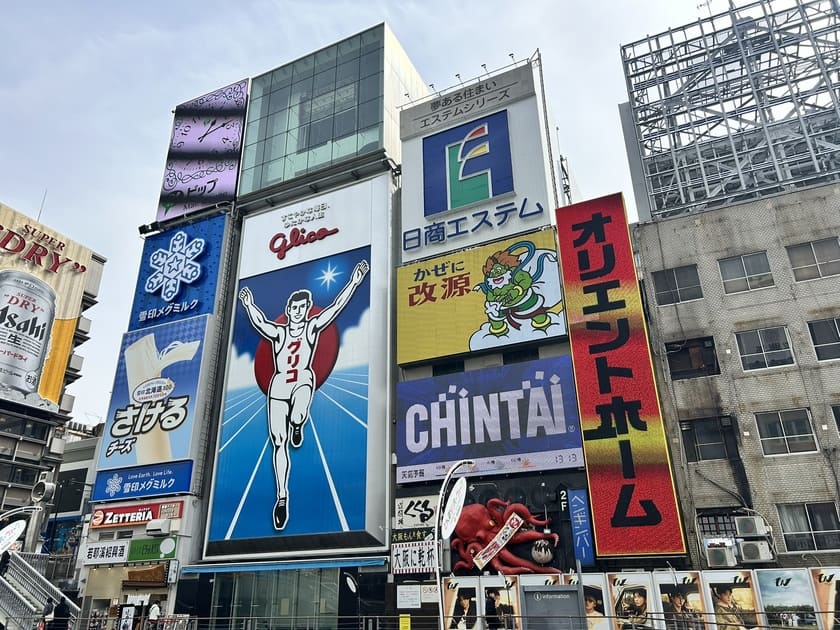
Later that afternoon we took the Kintetsu Line from Nara to Osaka Namba.
Our goal in Osaka was simple: eat okonomiyaki and takoyaki, and see the famous Glico sign in Dotonbori.
The Dotonbori area is full of food stalls and restaurants. We entered a small okonomiyaki restaurant where the staff cooked the dish on a large iron grill.
Around Dotonbori, there are several covered shopping streets called “-suji.” These arcades are filled with restaurants, clothing stores, and souvenir shops.
Walking through them reminded me a little of Myeongdong in Seoul because of the lively atmosphere and crowds.
One small cultural difference we noticed was the escalator rule.
In the Tokyo area, people stand on the left side of the escalator and leave the right side open for people walking. In the Osaka region, it is the opposite — people stand on the right.
Experiencing these small cultural differences made the trip even more interesting.
Winter in Kansai Is Colder Than Expected
Before this trip, I assumed Osaka and Nara would be warmer than Tokyo because they are located further south.
This turned out to be completely wrong.
We visited in early March. The temperature was around 10°C, but it felt much colder — closer to 5°C. I only brought a down vest instead of a full winter jacket, which was a big mistake.
The cold in this region feels different. In Japan, we call it “sokobie,” meaning a deep cold that rises from the ground.
I saw many people wearing knit hats and earmuffs.
Even my partner, who usually tolerates cold weather well, admitted that it felt very cold.
Kyoto and Nara are located in a basin, which means cold air tends to collect there during winter. If you visit Kansai during colder months, it is best to bring warm clothing.
Conclusion
Many travelers explore Japan by train, but a road trip offers a completely different perspective.
Driving allows you to see Mount Fuji, rural landscapes, lakes, and small towns that you might otherwise miss. Highway service areas, local restaurants, and unexpected cultural discoveries make the journey itself part of the adventure.
Our road trip from Tokyo to Nara allowed us to experience historic temples, playful deer, vibrant Osaka street food, and the unique atmosphere of Kansai.
Japan is not only a great country for train travel — it is also an excellent destination for a road trip.
If you have the chance to visit Japan, consider renting a car and exploring beyond the train routes. You may discover a side of Japan that many travelers never see.