When my niece visited a Japanese elementary school for the first time, she couldn’t believe what she was seeing.
“There’s no cafeteria?” she whispered.
Instead of lining up to buy food, the students were wearing white coats and masks. They were serving lunch to their classmates. Everyone ate the same meal, together, in the same classroom. And after eating, the students cleaned up by themselves.
To her, it looked unusual.
To me, it looked completely normal.
Japanese school lunch is not just about food. It is part of education.
More Than a Meal: Lunch as Education
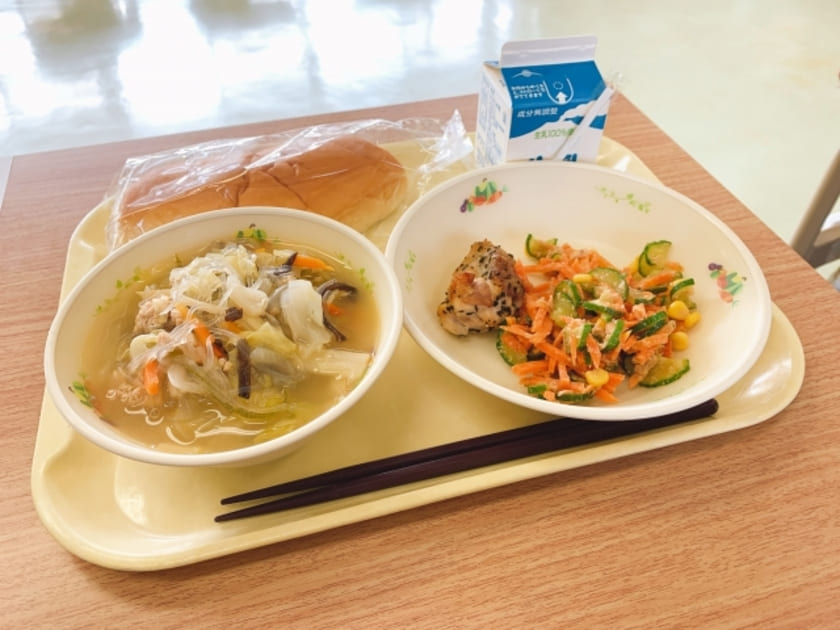
多くの国では、学校給食は単なる一日の休憩時間、つまりエネルギー補給の時間である。一方、日本では、学校給食は教室の延長線上にあるものと考えられている。
この制度は「学校給食」と呼ばれ、「学校が提供する給食」を意味します。食事は国の栄養ガイドラインに基づいて綿密に計画されています。通常、ご飯、スープ、魚または肉、野菜、牛乳などが含まれます。旬の食材がよく使われ、加工食品は最小限に抑えられています。
しかし、日本の学校給食を特別なものにしているのは、単にメニューだけではありません。それは、給食をどのように体験するかという点にあるのです。
Students eat together in their regular classroom, with their homeroom teacher. There is no separate cafeteria in most public elementary schools. Lunch becomes a shared daily ritual.
Students Serve Each Other
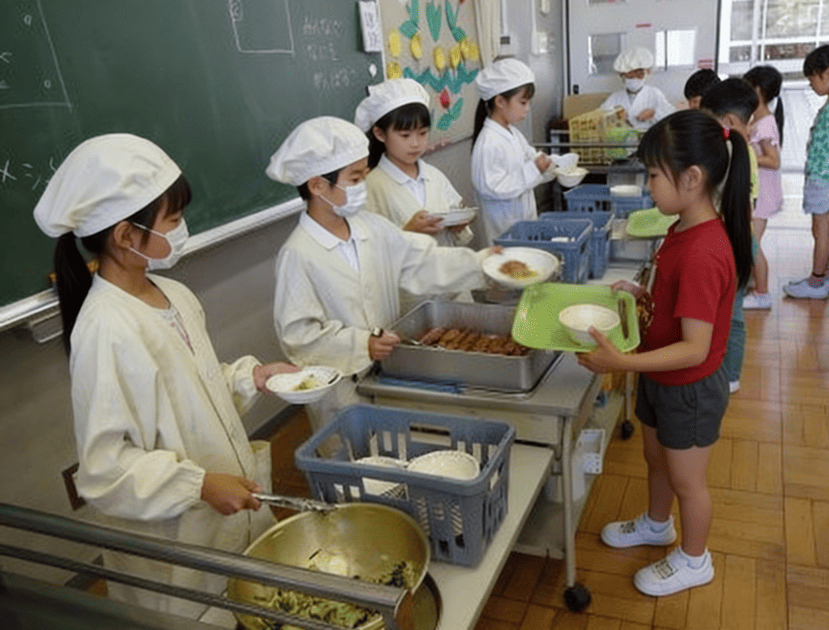
One of the biggest surprises for visitors is the kyūshoku tōban system — lunch duty.
Students take turns serving food to their classmates. Wearing clean white coats and masks, they carefully distribute rice, soup, and side dishes. The role rotates so every child experiences responsibility.
When my niece saw this, she asked, “Where are the staff?”
There are kitchen staff who prepare the meals, but students themselves manage distribution inside the classroom. This small routine teaches organization, cooperation, and awareness of others.
Everyone receives the same meal. There is little room for personal preference. The emphasis is on sharing the same experience.
Cleaning Is Part of the Lesson
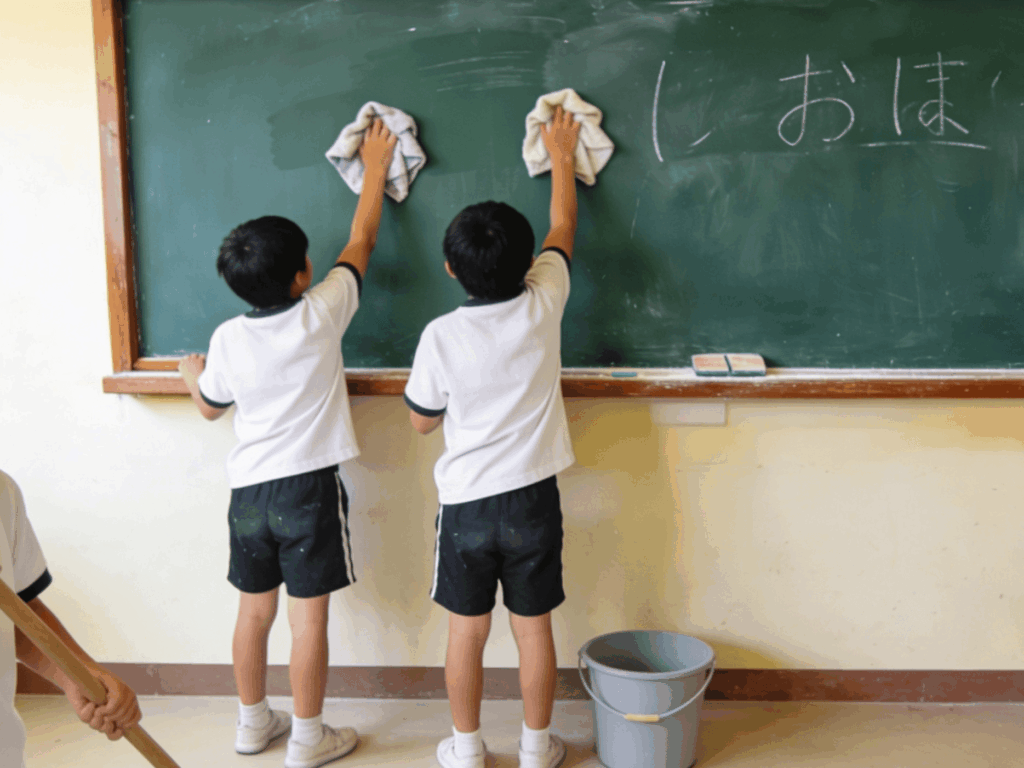
After lunch, students clean up — not only their dishes, but often their classroom.
In many Japanese public schools, there are no full-time janitors for daily cleaning. Students sweep floors, wipe desks, and tidy shared spaces together.
To my niece, this was even more surprising than serving lunch.
“You clean your own school?” she asked.
Yes. Because cleaning is considered part of character education. Children learn that shared spaces require shared responsibility.
No Morning Tea? Another Cultural Difference
Another moment of confusion came when my niece asked about “morning tea.”
In Australia, children typically have a snack break around 10 a.m. They bring fruit, crackers, or small treats from home. It is a normal and expected part of the school day.
In Japan, however, elementary schools usually do not have a morning snack break. Students wait until lunchtime.
When I explained this, she looked puzzled.
“No snack at all?”
At the same time, many Japanese parents are surprised to learn that children in Australia bring snacks to school. For us, eating between structured meals in the classroom is unusual.
These differences reveal something deeper about cultural rhythms — how societies think about food, discipline, and daily structure.
Harmony Through Shared Experience
Preparing lunch together, eating the same meal, and cleaning up as a group quietly shape children’s social awareness.
In Japan, this daily routine fosters a sense of belonging and collective responsibility. Students learn that they are part of something larger than themselves.
Some observers might describe this as conformity. But inside the culture, it is often understood as harmony.
— wa — the idea that smooth relationships make daily life easier.
No one explicitly says, “You must adapt to the group.”
Instead, children absorb the rhythm of cooperation through repetition.
Different Values, Different Systems
In Australia, school lunches reflect individual choice. Children bring their own lunchboxes, and snacks vary from child to child. The system supports personal preference and independence.
In Japan, the shared meal reflects group cohesion and equality.
They simply prioritize different values.
Understanding this difference helps us see how something as ordinary as lunch can reflect a society’s deeper mindset.
A Small Window Into Japanese Culture
Japanese school lunch may seem like a small detail of daily life. But it reveals much about how Japan approaches community, responsibility, and balance.
Food is not only nutrition.
It is connection.
And sometimes, the most ordinary moments — passing a tray of rice, waiting quietly for everyone to be served — quietly shape the way a society functions.